

Discover the guide to the different types of proofing baskets on the market!
Baking sourdough bread is a rewarding process that primarily requires a lot of time and patience. It also helps to have the right materials on hand. You need not only a good starter and good quality flour. The right proofing basket must not be forgotten either. These baskets come in handy during the final phase of the proofing process and ensure that your bread takes on its beautiful shape. But what is the best proofing basket for your bread? Round, oval, or another shape? And which material is the right choice? Here you will find the ultimate guide to the different proofing baskets on the market.
What is now hthe difference between a proofing basket and a bread pan?

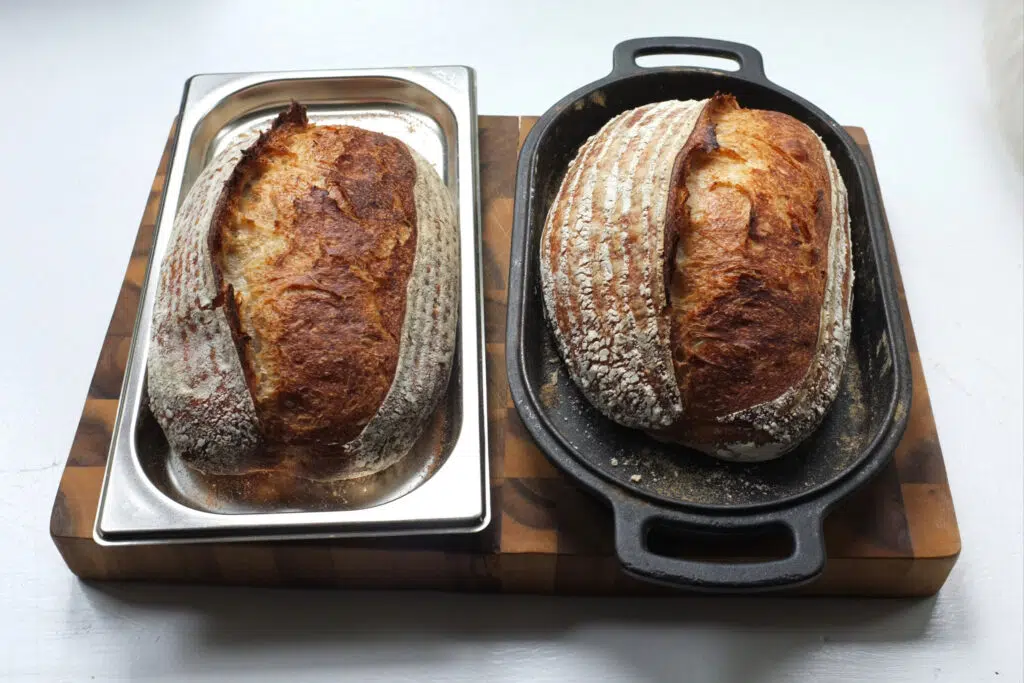
You ultimately use a proofing basket to shape your sourdough bread. So it is not surprising if you confuse these baskets with bread pans. However, the two tools are not the same. A bread pan is often a baking tin with the correct dimensions for bread. You let the dough rise in it, but you also slide it directly into the oven as soon as the dough is ready. Moreover, a bread pan is completely enclosed and made of metal. This is important, because it allows the heat in the oven to distribute well over the dough. You then get a loaf that is beautifully and evenly baked. During baking, the bread expands a little, taking on the shape of the bread pan.
You really only use a proofing basket for rising your bread. You can also see that in the materials these baskets are made of. Traditionally, they are made of reeds. This material is lightweight and allows sufficient oxygen to pass through. This ensures that your sourdough dough has plenty of room to grow. During that growth process, the dough molds itself to the shape of the proofing basket. That is beneficial, as it is particularly difficult to shape sourdough dough by hand. Proofing baskets ensure that the bread still takes on a beautiful, even shape.
But after rising, the proofing basket is no longer useful. You tip the dough onto baking paper and then place it in a cast-iron pan. So, you don't need a proofing basket for the final baking. In fact, they weren't made for that at all. They were developed solely to give your sourdough bread a good start before it goes into the oven.
What is best now: a rround or an oval proofing basket?


So you need a proofing basket to give your sourdough a nice shape, but what shape will that be? Generally, you have a choice of two popular shapes: round and oval. It is not the case that one shape has specific advantages over the other. So, just look at the shape you find beautiful. Perhaps you find it more practical to cut thin slices from an oval loaf. Or perhaps such a beautiful, round, rustic loaf appeals to you.
Also consider the pan in which you are going to finish baking the sourdough bread. For example, there are special cast iron pans with an oval shape. It goes without saying that you will want to give the bread an oval shape during rising. Do you have a large, round cast iron pan instead? Then it makes more sense to use a round proofing basket. It remains a matter of personal preference, so just look for the shape that works best for you.

Proofing basket with a special shape

Round and oval proofing baskets remain the most common shapes. In addition, you are encountering more and more other shapes these days. These give you the option to bake somewhat more special sourdough breads. Think, for example, of small triangles or a large square loaf. The disadvantage of these proofing baskets is that it is just a bit trickier to shape your dough correctly for the baskets. With a round shape, you roll the dough into a ball. With an oval shape, you lengthen the dough. These are traditional techniques that you master fairly quickly. But how do you approach it when you really want to bake a triangular loaf? It is much more challenging to shape the dough and bring it under proper tension in that case. Therefore, proofing baskets with a special shape are more suitable for advanced bakers.
What size do you need in your proofing basket?
The shape is not the only important consideration. The size of your proofing basket is also something to pay attention to. Are you using a basket that is too large for too little dough? Then you will end up with a rather flat loaf. The bread will not fill the entire basket and will not develop an even shape. Therefore, it is always important to match the size of the basket to the amount of dough you have. The easiest way to do this is by looking at the weight of your dough. Add up the weight of all ingredients to determine that.
Next, use the following guideline to find the ideal size for your proofing basket:
- 350 to 450 grams of dough: 16-centimeter proofing basket
- 450 to 550 grams of dough: 18 centimeter proofing basket
- 550 to 750 grams of dough: 20 centimeter proofing basket
- 750 to 1,000 grams of dough: 22 centimeter proofing basket
- 1,000 to 1,300 grams of dough: 24 centimeter proofing basket
- 1,300 to 2,000 grams of dough: 26 centimeter proofing basket
The size of the proofing basket is indicated in centimeters. This concerns the diameter of the basket..
Summary
To bake a beautiful sourdough loaf, you need a good proofing basket. This basket is preferably made of wicker and is specifically designed to let the dough rise only. So, do not confuse it with a loaf pan. The ideal shape of your proofing basket depends on the pan in which you want to bake, but also on your own preferences. Oval or round are the most common. Are you an experienced baker? Then square or triangular baskets are a fun challenge. Also, pay attention to the size of the basket. The ideal size depends on the weight and volume of your dough.
RELATED PRODUCTS
-
Proofing baskets
Round proofing basket (height 8cm)
Original price was: € 12,95.€ 11,95Current price is: € 11,95. -
Proofing baskets
Oval proofing basket (width 14cm)
Original price was: € 13,95.€ 12,95Current price is: € 12,95.


