
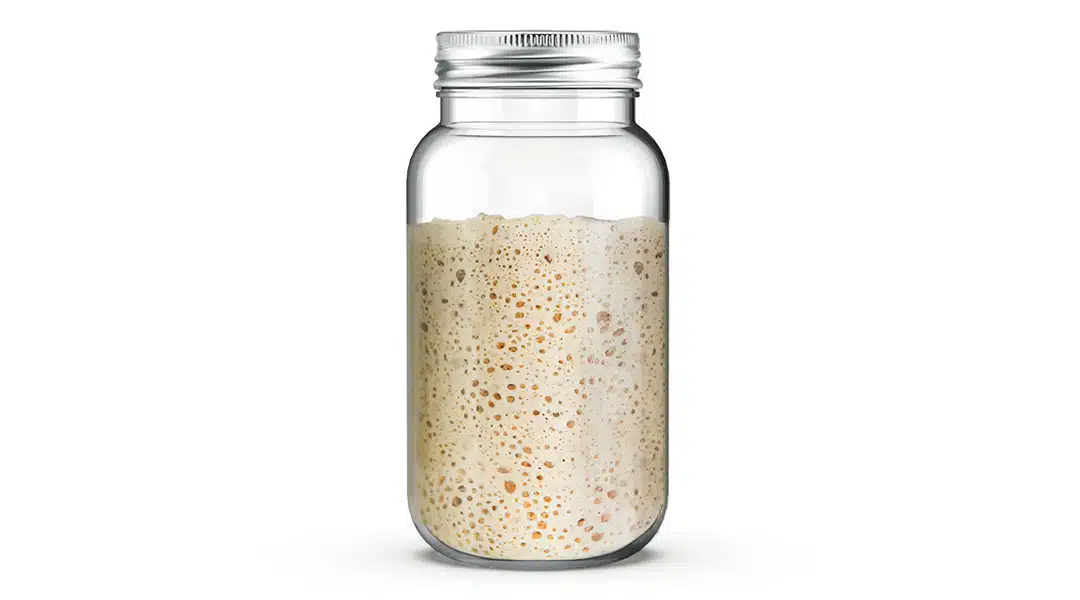
The secrets of a sourdough starter revealed: maintaining your sourdough starter in 2024?
2985952025-08-19T18:35:50+00:00In the world of artisan bread baking, the sourdough starter holds a prominent place – a mixture of flour and water that comes to life with wild yeasts and bacteria, forming the soul of every rustic and flavorful sourdough bread. Maintaining a sourdough starter is not merely a matter of routine; it is an art form that can be adapted to personal baking goals and styles.
Whether you are someone who loves baking rustic, authentic bread as a daily tradition, or you are the weekend baker who considers the aroma of freshly baked sourdough bread a weekly highlight, the maintenance of your sourdough starter can vary significantly. The feeding frequency, the ratios of flour and water, and even the temperature at which you store your sourdough starter can all be adjusted to suit your baking rhythm—whether you are striving for that daily golden crust or the periodic culinary masterpiece. In this article, we unravel the complexities of maintaining a sourdough starter so that you can confidently personalize the process.
The sourdough starter, an enchanting alchemy of simple ingredients, requires a thoughtful approach when it comes to maintenance. Below, we explore the three most common methods you can apply, depending on how often you plan to bake. Understanding these techniques ensures that your sourdough starter remains vibrant and ready for action, whether you are a daily baker or someone who practices the art of sourdough sporadically.

For the Frequent Baker: Sourdough starter Store at room temperature
If you bake sourdough bread almost daily, it is advisable to store your sourdough starter at room temperature, ideally between 20° and 23° Celsius. At this temperature, the sourdough starter remains active and ready for use, and requires regular feedings – usually once or twice a day. This keeps the yeast cells and lactobacilli lively and hungry, resulting in vigorous fermentation and a constant supply of that beloved sourdough for your daily bread-baking ritual.
For the Sporadic Baker: Sourdough starter Store in the refrigerator
If you bake less frequently, storing your sourdough starter in the refrigerator at a temperature between 1 and 7 degrees Celsius is an excellent option. The cold environment slows down the activity of the starter, meaning you only need to feed it once a week. This is a practical method for those who combine their passion for baking with a busy life. Your starter can rest and ferment slowly until you are ready to fire up your oven again.
For a Temporary Baking BreakFreezing Your Sourdough Starter
If you wish to take a break from baking, you can preserve your sourdough starter by freezing it. This is a long-term method in which the microorganisms are put into a kind of dormant state. When you are ready to pick up the baking thread again, you can gradually thaw and reactivate the sourdough starter. This thawing process can take several days, so plan this carefully before you decide to get your hands back into the dough.
Each method has its own nuances and requires attention to detail, but don't worry – with the right care and attention, your sourdough starter will reward you with delicious bread, time after time. Let's take a closer look at these methods and discover how to apply them to get the most out of your sourdough adventures.
Now we will zoom in deeper on each method so that you perfectly understand what you may and may not do:
1. For the Frequent Baker: Sourdough starter Store at room temperature
For the enthusiastic home baker who loves filling the kitchen with the aroma of freshly baked sourdough bread, maintaining a sourdough starter at room temperature is a daily commitment that brings great satisfaction. This method is ideal for those who want to keep the sourdough starter active and lively, ready to dive into a bread recipe at any moment.
Feeding the sourdough starter
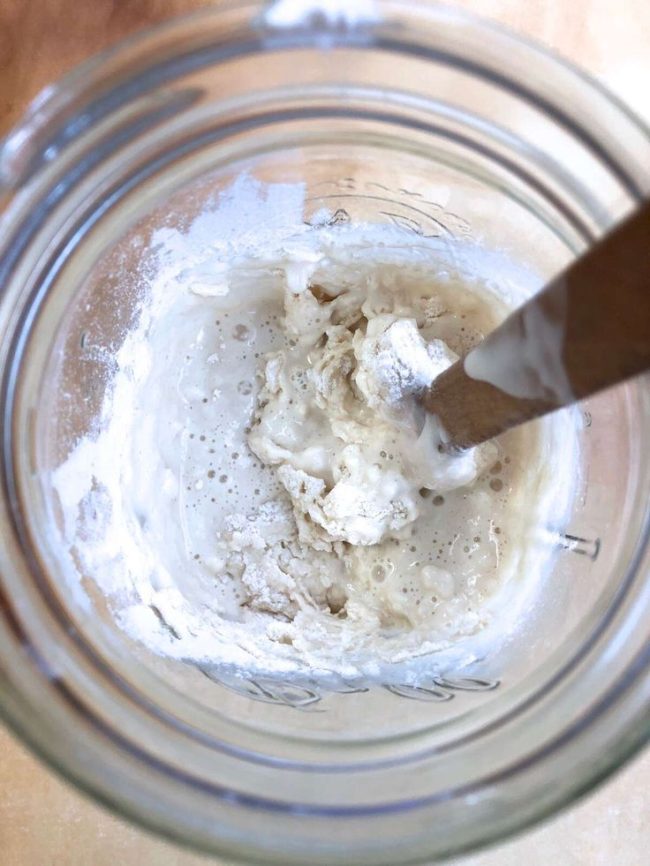
Take 100 grams of sourdough starter. Add 20ml of water and 20 grams of rye flour to your sourdough starter – the ideal ratio to give your sourdough starter the necessary 'fuel'. It is important to note that you should add equal parts water and flour to any amount of sourdough starter. Next, gently stir your sourdough starter with a wooden spatula or our white spatula. This helps to create a nice homogeneous mass and also introduces new oxygen into the mix, which is essential for the health and growth of your sourdough starter.
The Cycle of Feeding and Growing
At room temperature, your sourdough starter undergoes a cyclical process centered on feeding and growing. After you have fed the sourdough starter, the fermentation process begins and the starter will grow. This is where you really see the magic at work; the sourdough starter will be at its peak activity within 4 to 8 hours after feeding. The exact timing can vary depending on the temperature and environment: a warmer room accelerates the process, while a cooler environment slows it down.
The Role of Temperature
It is crucial to recognize that temperature has the greatest influence on the activity of your sourdough starter. At room temperatures above the optimal range of 20 to 23 degrees Celsius, your sourdough starter can reach its peak faster. Additionally, a higher room temperature also affects the quality of your sourdough bread.
The Time Factor
To keep your sourdough starter in top condition, repeat this feeding process at least every 18 to 36 hours. It is recommended to schedule this into your daily routine at fixed times. This ensures regularity, which benefits the sourdough starter, and helps you not to forget. Integrating your sourdough starter care into your daily schedule makes it second nature, similar to brewing your morning coffee or walking the dog.
Additional Tips
- Water quality: Preferably use filtered or bottled water to avoid chlorine and other chemicals that may be present in tap water and can harm microbes.
- Flower selection: Varying the types of flour can increase the diversity and activity of your sourdough starter. Experiment with a mix of rye and wheat for different results. Preferably use organic and certainly unbleached flour.
- Hygiene: Keep your glass jar clean. Consider regularly transferring the sourdough starter to a clean jar to prevent cross-contamination and unwanted mold growth.
- Observation: Pay attention to changes in smell, bubbles, and volume; these are all signs of the health and activity of your sourdough starter.
By understanding and appreciating the nuances of feeding your sourdough starter at room temperature, you can lay the foundation for consistently delicious bread.
2. For the Sporadic Baker: Sourdough starter Store in the refrigerator
For those who prefer to save their sourdough adventure for special occasions or simply do not find the time to bake every day, keeping the sourdough starter in the refrigerator offers a perfect solution. This method slows down the activity of the sourdough starter and reduces the frequency of feeding to just once a week.
Storing sourdough starter in the refrigerator:
Storing your sourdough starter in the refrigerator is an excellent way to keep it in good condition without daily maintenance. Follow this simple step-by-step plan to ensure your sourdough always stays lively and healthy, ready to bake delicious sourdough bread.
Step 1: Prepare your starter for rest
Ensure your starter is well-fed before placing it in the refrigerator. This provides the yeast and bacteria with enough nourishment to 'go to sleep' without weakening. For example, add 50 g of flour and 50 g of water to 50 g of starter and mix well.
Step 2: Use the glass jar
Store your starter in a glass jar with a loose lid so that some air can escape. Choose our reusable glass jar to avoid plastic waste, perfect for a circular lifestyle.
Step 3: Place in the refrigerator
Place the jar at a constant temperature, ideally around 4°C. This slows down the activity of your sourdough starter, allowing you to store it for up to 7 to 10 days without re-feeding.

When you want to use the starter again
Step 4: Let come to room temperature
Take your starter out of the fridge and let it stand at room temperature for at least 1 to 2 hours before feeding it. This gives the yeasts and bacteria time to wake up slowly, without stress.
Step 5: Give the first feeding
After the waiting period, you can feed your starter with equal parts water and flour. Then let it stand at room temperature for 4 to 6 hours. You will see that it becomes active again and bubbles.
Step 6: Repeat if necessary
If your starter has been in the refrigerator for a long time (more than 10 days), give it a second feed before baking with it. This ensures that it is fully potent.
With this step-by-step plan, your sourdough starter retains its strength and vibrancy, ready to take your homemade sourdough bread to the next level.
3. For a Temporary Baking BreakFreezing Your Sourdough Starter
Taking a break from baking doesn't have to mean saying goodbye to your cherished sourdough starter. On the contrary, there are ways to preserve your sourdough starter for a longer period, so you can return to the baking process without starting from scratch. Freezing is one of the simplest and most effortless methods to store your sourdough starter for a longer time.
Freezing your sourdough starter:
To freeze your sourdough starter, start with the normal feeding process. Take 100 grams of sourdough starter from your glass or preserving jar. Add 50 ml of water and 50 grams of rye flour to your sourdough starter – the ideal ratio to give your sourdough starter the necessary 'fuel' before it goes into a cold sleep. It is important to note that you should add equal parts water and flour to any amount of sourdough starter. Mix this well into a homogeneous mass. Then let the sourdough starter stand at room temperature for two hours so that the yeast cells can start their work and fermentation can begin.
After these two hours, it is time to place the sourdough starter in the freezer. Make sure to put the sourdough starter in a freezer-safe container with enough room for it to expand if necessary. It is also wise to label the container with the freezing date so you have a clear idea of how long the sourdough starter has been frozen.
Defrost and Reactivate
When you are ready to start baking again, take the sourdough starter out of the freezer and let it thaw slowly at room temperature. Thawing time may vary depending on the amount of sourdough starter and the room temperature. Once the sourdough starter is thawed, take 100 grams of the starter to use, and feed the remaining portion with 50 ml of water and 50 grams of rye flour. It is important to repeat this feeding process at least three times before you actually start baking with the sourdough starter, to give the active cultures sufficient time to recover from their frozen state.
Additional: For a Temporary Baking Break: Your sourdough starter
Dehydration as an Alternative
An alternative method for preserving your sourdough starter for a long time is dehydration. To dehydrate, spread the active sourdough starter in a thin layer on a piece of parchment paper and let it air dry until completely brittle. Once dry, you can crumble the sourdough starter and store it in an airtight container. This dried form can last for months, if not years. When you are ready to revive your sourdough starter, you will need to soak the dried pieces in water and feed them with flour to bring it back to life.
Additional Tips for Dehydration
- ThicknessEnsure that the layer of sourdough starter you dry out is not too thick, to guarantee even and complete drying.
- StorageStore the dried sourdough starter in a cool, dry place out of direct sunlight to preserve its quality.
- Reactivation timePlease note that reactivating a dried sourdough starter may take longer than reactivating a frozen sourdough starter.
With these methods, you can take a stress-free break from baking, knowing that your sourdough starter is waiting for you, ready to come back to life whenever you want to let the aroma of fresh sourdough bread waft through your house.


