

Making a sourdough starter: the complete step-by-step plan for healthy bread.
2985952025-08-19T18:34:48+00:00Table of contents:
- What is a sourdough starter?
- Ingredients for a sourdough starter
- Step 1: The basics
- Step 2: Feeding the starter
- Step 3: Observe and be patient
- Step 4: Maintaining your starter
- Avoid common mistakes
- Handy tips for a strong starter
- Why choose a homemade sourdough starter?
- Recipe ideas with sourdough starter
- Summary
What is a sourdough starter?
A sourdough starter is the foundation for delicious sourdough bread. It is a mixture of water and flour containing yeast and bacteria. This living culture ensures natural fermentation, giving your bread that characteristic flavor and airiness. No packets of yeast, no artificial additives. Just pure nature, exactly the way you want it. A sourdough starter fits perfectly with a conscious and organic lifestyle. By making it yourself, you have complete control over the ingredients and can make a sustainable choice.
Ingredients for a sourdough starter
To make a sourdough starter, you only need a few things:
- Organic flour (preferably whole wheat or rye, for more active bacteria).
- Water (preferably filtered or mineral water).
- A clean glass jar with a loose lid or cloth.
- A kitchen scale.
- A wooden or silicone spoon for mixing (metal can disrupt fermentation).
- A dose of patience (it's worth it, I promise!).
Choose organic ingredients, not only to improve the quality of your starter, but also because it aligns with a sustainable and eco-friendly lifestyle.

Step 1: The basics
Mix 50 g flour and 50 g water in your glass jar. Stir well until you have a thick batter.
Cover the pot loosely with a cloth or lid (so that air can escape).
Let this mixture stand for 24 hours at room temperature, preferably in a place without drafts.
Tip: Choose organic flour, as it contains no chemicals that can inhibit fermentation. Rye flour works especially well for a strong starter!

Step 2: Feeding the starter
After the first 24 hours, add another 50 g of flour and 50 g of water. Mix this well. Repeat this process every 24 hours for the next 5-7 days.
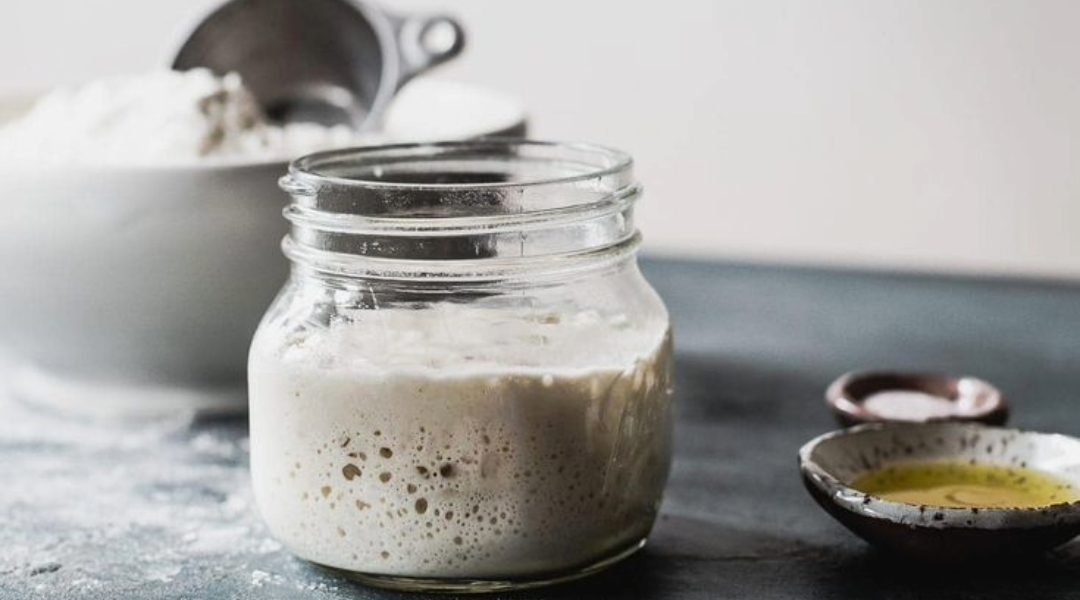
You will notice air bubbles appearing. This is a sign that your sourdough is coming to life! The smell may be a bit sour at first, but that is normal.
Extra tip:
If you notice that your starter is slow, add a small amount of whole wheat or rye flour to your food. This contains more nutrients and minerals that stimulate fermentation.

Step 3: Observe and be patient
Around day 3 or 4, you will see your starter bubbling more and developing an airy texture. This is the moment when your patience is rewarded. Make sure that you:- Check the consistency: It must be thick and creamy, not too runny.
- Check the smell: It must smell fresh and sour, like yogurt or vinegar.

Step 4: Maintaining your starter
After about 7 days, your sourdough starter is ready for use. You can now start baking bread or store your starter in the fridge if you use it less often.- Store in the refrigerator: Feed your starter once a week with 50 g of water and 50 g of flour.
- With a lot of baking: Leave the starter at room temperature and continue feeding it daily.
Avoid common mistakes
- Do not use chlorinated tap water. This can kill natural bacteria.
- Never cover your jar completely; your sourdough needs air.
- Don't give up if the process takes longer. Every starter is different!
Frequently asked questions:
- What if my starter doesn't show any bubbles? Use a warmer place, such as an oven with only the light on.
- How do I know if my starter is dead?If there is no activity after a week of feeding, it may be necessary to start over.
Handy tips for a strong starter
- Use local flour: Organic flour from a local mill often contains more active yeasts.
- Heat is crucial: Ensure your starter is kept at 22-25°C for optimal fermentation.
- Stay consistent: Feed your starter at fixed times, just like a routine in your day.

Recipe ideas with sourdough starter
Your sourdough starter is versatile! Use it not only for bread, but also for:
- Pancakes: Perfectly fluffy and healthy.
- Pizza: A delicious, crispy crust.
- Crackers: Zero waste by using leftover starter.


Why choose a homemade sourdough starter?
A homemade starter fits perfectly into a circular and conscious lifestyle:
- Durable: no more packets of yeast needed.
- Healthy: No additives, only natural ingredients.
- Creatively: Every starter has its own unique flavor and character.
Moreover, it is a wonderful feeling to bake bread that is truly yours, from start to finish. It creates a deeper connection with your food and your lifestyle.
Summary
Making a sourdough starter is a simple and fascinating process. By combining water and flour, you create a living culture that forms the basis for healthy, organic bread. The process requires some patience and love, but the result is worth it: a starter that gives your sourdough bread that unique flavor and texture. Start today and enjoy the satisfaction of truly homemade bread!
Tip: use our own organic rye flour to feed your sourdough starter. Take a look here!


