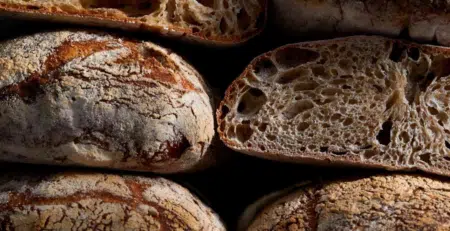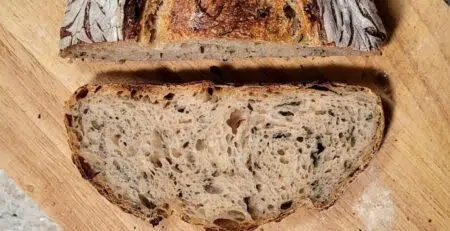


Simple Sourdough Bread Recipe – Bake Your Own Perfect Crispy Loaf!
2985952025-08-19T18:34:13+00:00Many people ask for a simple sourdough bread recipe – a recipe that is so easy that you only need to mix the dough, can let it rest while you work or go about your day, and then shape and bake it when you get home. This simple sourdough bread recipe is exactly that. It is the ultimate way to bake a delicious, crispy loaf without any hassle.
Do you think sourdough baking takes too much time? This recipe proves otherwise! You can enjoy fresh, naturally risen dough at home. sourdough bread and say goodbye to supermarket bread forever. Trust us – homemade sourdough bread is so much better!

Why you will appreciate this simple sourdough bread recipe
✔ Super simple – This recipe is simple and makes a delicious loaf of bread in a few steps.
✔ Crispy crust, soft inside – The perfect balance between a crispy crust and a soft, airy crumb.
✔ Versatile – Add ingredients as desired, such as herbs or nuts, and create your own unique variant!
✔ Delicious taste – This sourdough bread has a subtly sour taste, but you can adjust the acidity to your preference.

Why does this sourdough bread recipe work so well?
This sourdough bread recipe makes use of an active, effervescent sourdough starter instead of instant or dry yeast. You can make your own starter, buy one, or ask a friend who already bakes.
This recipe is ideal for beginners: it contains a smaller percentage of starter, allowing the dough to rise slowly during the day or night. The result? A delicious, tender bread with a soft crumb, without complicated techniques.
Important ingredients for sourdough bread
With only four ingredients is this sourdough bread much healthier than supermarket bread, without unnecessary additives.
✔ Active sourdough starter – Make your own starter, get one from a friend, or buy one.
✔ Bread flour – Use high-quality flour with 12-12.51 TP3T protein.
✔ Water – Use warm water to make the dough rise faster, or cool water to slow down the process.
✔ Salty – Use Celtic sea salt, preferably ours 😊 Celtic Sea Salt 500 grams
Do you want to experiment? For example, add fresh rosemary or add other herbs after the first rise.

Schedule for baking sourdough bread
Because working with a sourdough starter can be new, we provide a sample schedule. The exact times depend on the temperature of your dough and starter.
| Day 1: Evening | Day 2: During the day |
|---|---|
| 20:00 – 08:00: Feed your sourdough starter and let it ripen overnight at 20-24°C. | 08:00: Mix the dough. |
| 08:00 – 18:00: First rise (bulk fermentation) at 20-24°C. | |
| 18:00: Shape the dough. Let it rest for the second rise. | |
| 20:00: Bake the bread. |
Is your starter or dough colder? Then the rising takes longer. Warmer? Then it goes faster.
How do you make this simple sourdough bread?
- Feed your sourdough starter
A ripe starter is essential. Ensure it doubles in volume before using it.


- Mix the dough
Combine active sourdough starter, water, salt, and flour. Mix with a dough whisk or your hands into a coarse dough.


- Bulk fermentation (first rise)
Cover the dough and let it rise for 10-12 hours in a warm place (24-26°C) until it has doubled in volume.


- Shaping and second rise
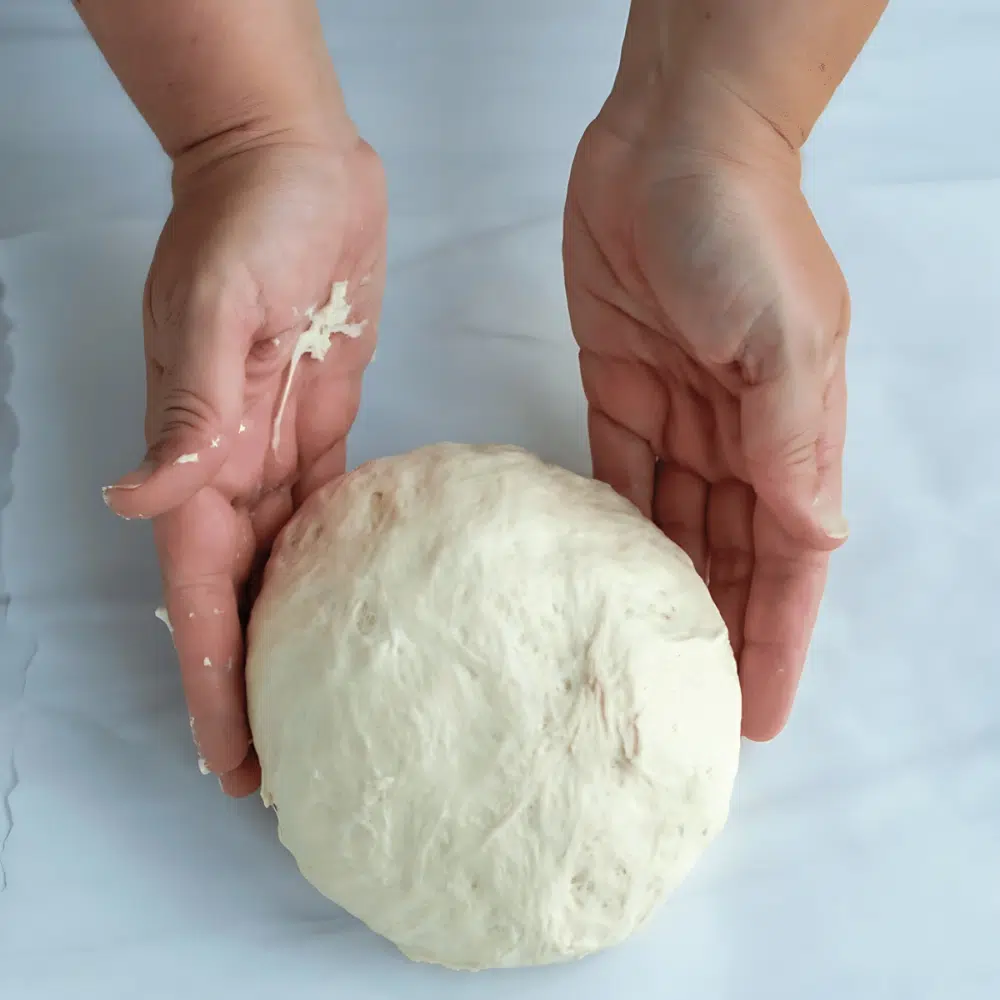
Shape the dough into a ball and place it on baking paper. Let it rise for another 1-2 hours.

- Scoring and baking
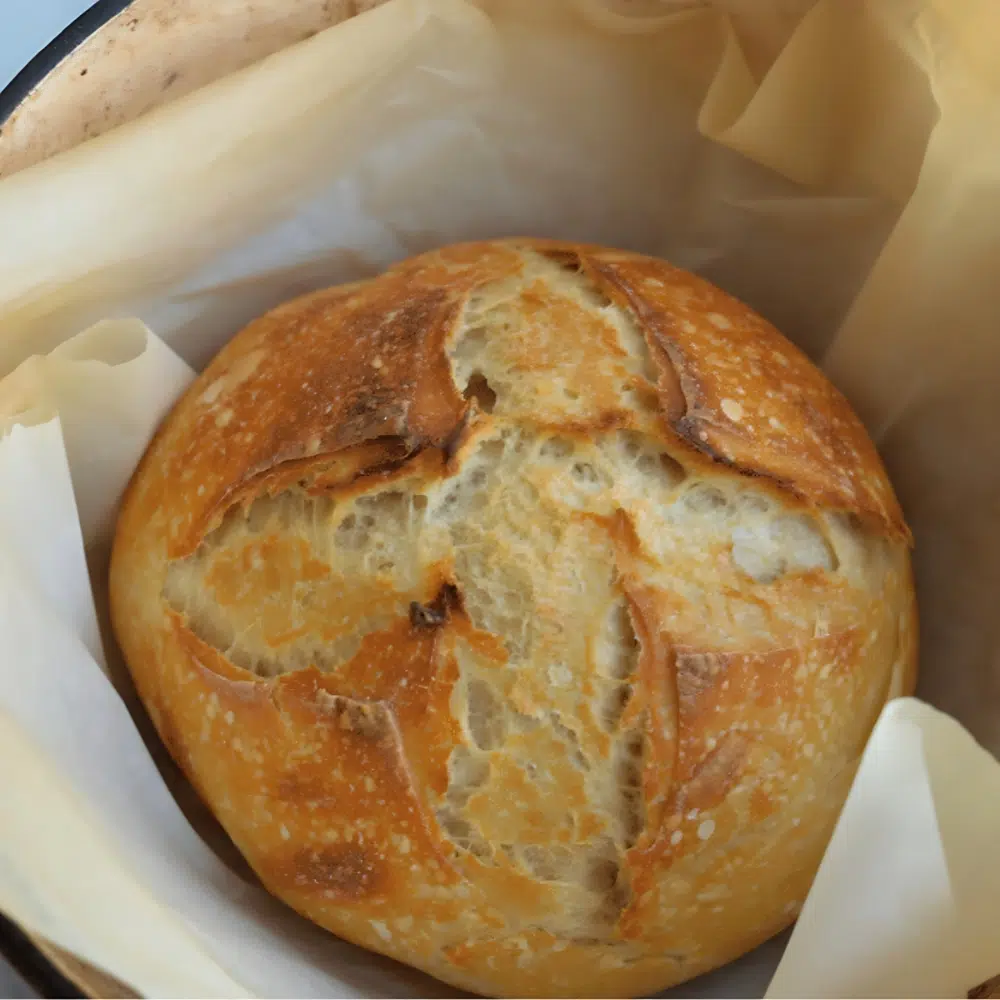
Make an incision in the dough with a sharp knife. Heat a Dutch oven Preheat to 260°C and lower the temperature to 230°C as soon as the bread goes in.
✔ Bake for 25 minutes with the lid on.
✔ Bake for 20 minutes without a lid
Let cool completely before cutting!
No Dutch oven? Use a baking sheet with a pan of ice cubes underneath for steam, or bake the bread in a loaf pan.



How do you store sourdough bread?
✔ Room temperature: In a sourdough bread bag Sourdough bread stays fresh for 2-3 days in a bread box.
✔ Freeze: Slice the bread, place baking paper between slices, and freeze it. This way, it will keep for up to 2 months.
Tips for the best sourdough bread
✔ Maintain your starter well – The healthier your starter, the better your bread.
✔ Use active starter – A starter that has just peaked contains the most wild yeasts and provides the best leavening behavior.
✔ Temperature is crucial – Check your dough temperature with a thermometer. This affects the rising time.
✔ Use a scale – Weighing flour is much more accurate than measuring with cups. This ensures a consistent result.