The ultimate guide to autolysis in your sourdough bread
Baking sourdough bread requires various steps. All these steps have their own function, from letting the dough rise to creating a firm shape. One of the steps that is often skipped is the autolysis of the sourdough bread. It might feel like a somewhat unnecessary step, but it can make a big difference in how your dough ultimately feels and works. Discover here exactly what autolysis entails and what to look out for.
What is the meaning of autolysis?
Autolysis you can view this as the first step of the baking process for your sourdough bread. At this step mix your water and flour together. Next, let this stand for a while before adding the sourdough starter and salt. By allowing the water and flour to rest, gluten bonds form. Naturally, these glutens also form during later steps in the rising process, but you are essentially giving the dough a head start. This offers a number of nice benefits.
1. Improved stretchability
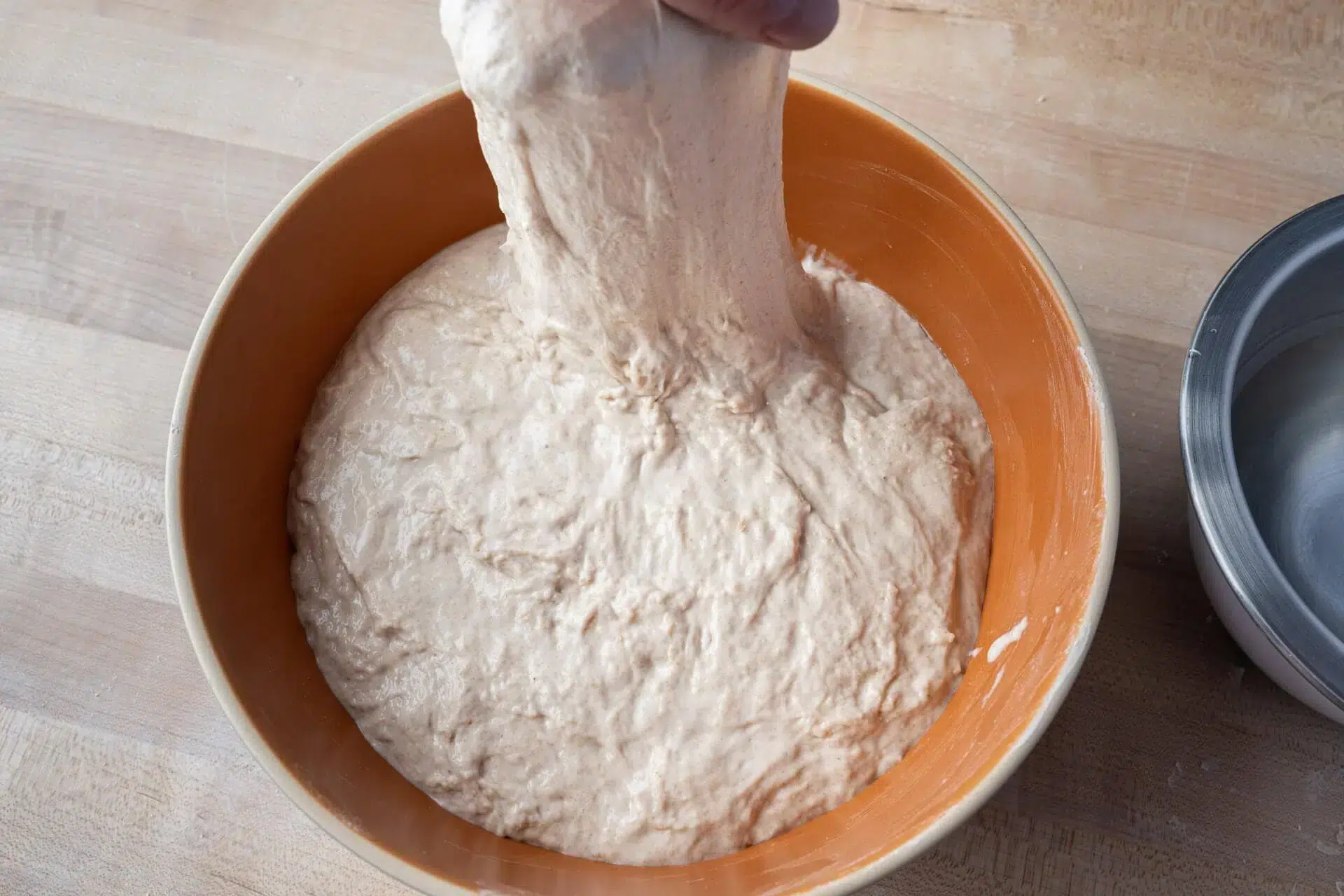
An elastic dough springs back to its original shape easily. You can easily stretch a stretchable dough without it tearing. With sourdough, it is important to find the balance between elasticity and stretchability.. Often, the elasticity is fine, but the dough tears easily when you stretch it just a little too far. During autolysis, certain enzymes are released. These consume a portion of the proteins in the flour. This makes the dough just a bit more flexible.

2. Less kneading time
Sourdough is already a type of bread that requires little kneading time, but thanks to autolysis, you need to knead the dough even less. The gluten bonds form during this step, meaning you do not have to make them by hand.
3. Better color and taste
Too much oxygen is not good for bread dough. Therefore, it is risky to knead dough for too long. Because you reduce the kneading time when performing autolysis, less oxygen also reaches the dough. This ultimately results in a better taste and gives the bread a nicer color..
The disadvantages of autolysis in sourdough bread

Every choice you make brings both advantages and disadvantages. This also applies to autolysis in sourdough bread. There are a few potential disadvantages you should take into account.
1. More difficult to add other ingredients
Gluten bonds form during autolysis. These hold the dough together nicely. That is great, but it also makes it more difficult to add other ingredients. So, do you still need to add your starter and some salt? Then that requires a bit more work.
2. It takes more time
Baking sourdough bread simply takes a lot of time. Autolysis is an extra step that you add to the process, and therefore it also takes time. So perhaps you do not want to take the time for that.
3. Your dough may become stickier.


It always takes some trial and error when starting the autolysis. Depending on the proportions and ingredients in your dough, autolysis that lasts too long can make the dough very sticky. You can still bake it, but it will be slightly harder to shape.
How long does autolysis take?
There are no hard rules for autolysis. How long you should let this step last depends on the dough and the conditions. Often, half an hour is sufficient, especially when using regular flour. Do you like baking with aged whole wheat flour? Then you can safely extend the autolysis to an hour. There is no major risk if you let this step last just a little longer. Autolysis that is too long primarily causes the dough to perhaps become too stretchable..It is often easiest to discover for yourself what duration works well for your dough and ingredients. You might find that half an hour is just a little too short, but that the dough feels nice after forty-five minutes. Don't be afraid to experiment to perfect your own recipe..
Should you add the sourdough starter during autolysis?

Autolysis is truly the first step of the baking process. This means that you only mix the flour and the water together. The starter is therefore added to the dough only after the autolysis.. There is one exception to this. Do you have a fairly dry dough in which a relatively small amount of water is used? Then the autolysis might not work properly if you do not add the starter yet. The flour then contains too little water to get the process going. In that case, it is wise to add (part of) the starter in advance.
Is autolysis always necessary?
Autolysis in sourdough bread is not a necessary step, but in many cases, it is a useful one. When is it worth adding this step to your process? When…
- you use flour with a high protein content
- you use a lot of whole wheat flour
- you like it when dough is easily stretchable
- you mix the dough by hand and want to shorten the mixing time
- you want to make the flavor of the dough as rich as possible
There are also situations where it is better to skip the autolysis, such as when…
- you work mainly with freshly ground flour
- you use a type of flour that is already very stretchy, such as spelt
- you want to get the dough into the oven as soon as possible
Summary
Autolysis is the first step in the sourdough bread baking process. In this step, you mix only the flour with water and let it rest to form gluten bonds and break down some of the proteins. The result is a stretchy, flavorful dough.. Autolysis is performed without adding a sourdough starter. Do keep in mind, however, that this step makes it slightly more difficult to mix the rest of your ingredients into the dough. It is not a necessary step, but it is certainly helpful when working with high-protein or whole wheat flour.