

Discover the best flour for your sourdough bread: a guide for healthy, nutritious, and gluten-conscious bakers
Dive into the multifaceted world of flour and discover how different types can influence the taste, texture, and success of your sourdough bread. In this blog, we explore not only popular choices like wheat flour and rye flour, but also the special qualities of organic wheat flour, spelt flour, and stone-ground flour. Each of these flour types brings its own unique properties and benefits to your baking process, ideal for the home baker looking to take their sourdough to the next level.
Moreover, we dive into the world of 'T' values, a guide to understanding the fineness and type of flower, of T45 to T150, and how these affect the structure of your bread. Bran and sprouts also get a spotlight, where we highlight their role in nutritional value and flavor development.
Table of contents:
1. Wheat flour: the basis of sourdough bread
2. Organic wheat flour: pure and natural
3. Rye flower: dark and rich
4. Spelt flour: An ancient grain variety rediscovered
5. Stone-ground flour: back to basics
6. The '‘T‘'-value explained
7. The importance of bran and sprouts
1. Wheat flour: the basis of sourdough bread

Wheat flour is known as the linchpin of the world of sourdough bread, partly thanks to its high protein content, which is essential for developing a strong gluten structure. This protein content, which can reach 141 TP3T or more in some types of wheat flour, is crucial for creating the elasticity and gas-retaining properties needed for a well-risen sourdough bread. This elasticity ensures that the bread can expand nicely during the baking process and develop an airy, open crumb.
The strong gluten structure obtained by kneading the dough not only ensures impressive rising in the oven but also contributes to the final texture and mouthfeel of the bread. The use of wheat flour with a high protein content is therefore a choice not only for structure but also for the quality and taste sensation of the final product.
Moreover, wheat flour offers a versatile base that can be adapted with other flours such as rye or spelt, allowing bakers to experiment with different flavors and textures while still benefiting from the strong foundation that wheat flour provides. This versatility makes wheat flour an indispensable ingredient for anyone wishing to explore the rich and complex world of sourdough bread.
2. Organic wheat flour: pure and natural

The quality is directly influenced by the absence of chemical agents during the growing process, ensuring the final product remains pure and natural. This not only has a positive impact on the taste and texture of sourdough bread but also contributes to a healthier environment.
The cultivation of organic wheat on nutrient-rich soils leads to higher quality grain. This quality translates into flour rich in essential nutrients and natural flavor enhancers, resulting in bread with a deeper, more satisfying taste. The improved fermentation properties of organic wheat flour, thanks to higher levels of natural yeast and other beneficial microorganisms, ensure a more vibrant sourdough culture. This process not only increases the nutritional value of the bread but also improves its structure and shelf life. Organic wheat flour, being less processed than its non-organic counterparts, retains more of the grain's natural characteristics. This results in a richer bread, in terms of both taste and nutritional value, and supports healthy digestion thanks to the presence of more fiber and fewer additives.
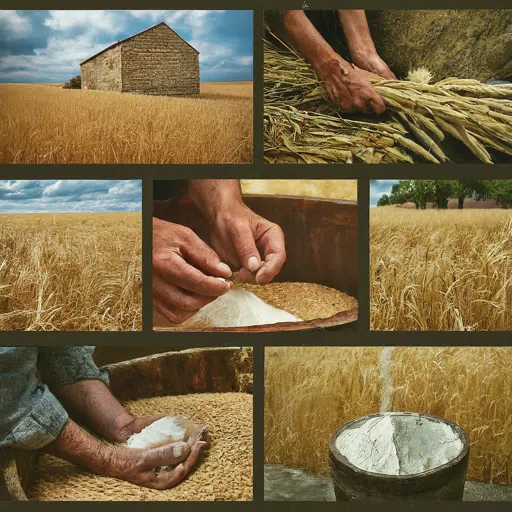
Choosing organic wheat flour is therefore not only a choice for better bread, but also for a better planet.
3. Rye flower: dark and rich

Rye flour, known for its rich, earthy flavors, offers a wealth of possibilities for sourdough bread. Despite that it is lower in protein compared to wheat flour, which normally contributes to the structure and volume of bread, rye flour has unique properties that make it popular among bakers.
Rye flour transforms sourdough bread with its deep, complex flavors. The lower gluten content of rye results in a more compact texture, making the bread characteristic and distinctive.
Benefits of rye flour
- Deep flavor: Rye flour enriches bread with a full, almost fruity flavor that you won't easily find in other types of flour.
- Natural fermentation: Rye flour has a natural affinity with the fermentation processes characteristic of sourdough, which also contributes to a livelier starter culture.
- Nutritional value: Rye is rich in fiber, vitamins, and minerals, making it a healthy choice.
Why consider rye flour?

Although rye flour has attractive properties, using only rye flour can result in a very compact loaf. This is due to the lower gluten content, which is essential for creating an airy texture in bread. Many bakers therefore opt for a mix of rye flour and wheat flour to utilize both the unique flavor of rye and achieve a satisfying texture.
The pure use of rye flour presents an interesting challenge for bakers seeking a denser, nutritious bread. However, for those who prefer a lighter result, it is recommended to combine rye flour with wheat flour with a higher protein content.
Rye flour and sourdough bread form a wonderful duo for the adventurous baker. The key lies in balancing ingredients and techniques to create the perfect bread that reflects both the deep flavor of rye and offers a pleasant texture.
4. Spelt flour: An ancient grain rediscovered

As an ancient grain, spelt offers a nutty flavor and a pleasant texture that gives the bread a distinctive character. It is slightly richer in protein than regular wheat, which contributes to good gluten development, essential for the structure of the bread.
Benefits and strengths of spelt flour
- Taste profile: Spelt flour adds a deep, nutty flavor to sourdough bread that you don't get with regular wheat flour.
- Nutritious: Spelt is rich in fiber, protein, and essential minerals, making it a healthier choice.
- Processability: Although spelt contains gluten, it is often more digestible than conventional wheat, making it a good option for people who are sensitive to wheat gluten.
Best practices when getting started with spelt flour!
- Hydration: Spelt absorbs more water than regular wheat flour, so it is important to adjust the hydration of your dough when starting with spelt flour.
- Mixing: Do not over-knead your spelt dough; spelt gluten is more delicate than that of regular wheat, so careful handling is essential.
- Fermentation: Give spelt dough sufficient time to ferment. The rich flavor of spelt comes out best in slow-fermented doughs.
Spelt flour in sourdough bread can enrich your baking experience with its unique flavor and nutritional benefits, provided you make a few adjustments to your baking process.
5. Stone-ground flour: back to basics

If, like many others, you want to be more conscious of your food choices, switching to stone-ground flour can be a revelation.
The History of Stone-Ground Flour
Stone-ground flour is not a new invention. It is a return to basics, to a time when flour was still produced using the power of natural elements such as water and wind. This traditional method uses stone mills to grind grains, a technique dating back to ancient Egypt. The modern world has almost forgotten this art, but with the renewed interest in artisanal and conscious eating, stone-ground flour is making a comeback.
Benefits of stone-ground flour
- Nutritional value: Stone-ground flour retains more nutrients, including vitamins, minerals, and fiber, thanks to the slower milling process. This is in contrast to commercially milled flour, where many nutrients are lost.
- TasteBaking enthusiasts will notice that stone-ground flour has a richer and more authentic flavor profile, resulting in breads with more character.
- DigestibilityAlthough not gluten-free, stone-ground flour from ancient grains may be easier to digest for some with gluten intolerance, thanks to a lower gluten index and a more complex molecular structure.
Stone-ground flour in sourdough bread
Integrating stone-ground flour into the sourdough bread baking process is a choice not only for quality but also for health. Sourdough, with its natural fermentation process, improves the digestibility of gluten and makes the nutrients in the bread more accessible. When you add stone-ground flour to this process, you enhance these effects, resulting in a more nutritious, flavorful, and digestive-friendly bread.

For the conscious baker, someone who values both quality of life and the pleasure of baking, stone-ground flour represents more than an ingredient. It is a commitment to a healthier, more sustainable, and fulfilling way of life. It is a choice that brings you closer to the origin of your food, allowing you to nourish not only what your body needs but also what your soul desires.
When you delve into the art of bread baking, you soon discover that not all flour is created equal. For the conscious baker, someone who cares about nutrition and perhaps has some sensitivity to gluten, the choice of flour becomes even more important. Here, I introduce you to the T-value of flour, a crucial factor that can make all the difference in your baking results, especially when preparing sourdough bread.
The T-value in flour! What do we need to know?

The T-value, an abbreviation for 'Type', refers to the degree of extraction of flour – how much of the grain kernel remains in the meal after milling. This value provides insight into the amount of minerals in the flour and is therefore a direct indication of the nutritional value and strength of the flour. The higher the T-value, the more of the grain kernel has been retained, resulting in more nutritious but also heavier flour.
How is the T-value determined?
The T-value is determined by analyzing the ash content in the flour. This ash content, expressed as a percentage, tells us how much of the grain kernel remains in the flour after milling. A higher T-value means a higher ash content, and therefore a flour that is richer in minerals, fiber, and other nutrients.
Effect of the T-value on sourdough bread
The T-value of flour has a direct influence on the texture, taste, and leavening process of your bread. Flour with a low T-value produces a lighter, airier loaf, ideal for finer baked goods. Flour with a high T-value, rich in fiber and nutrients, is perfect for nutritious, hearty sourdough bread.
| T-value | Ash content (%) | Ideal for | Features |
| T-45 | 0.45 | Fine pastries, cakes | Light, fine, low in minerals |
| T-55 | 0.55 | All-purpose baguettes | Fairly light, versatile, slightly richer in minerals |
| T-65 | 0.65 | Rustic bread, baguettes | Good balance between lightness and nutritional value |
| T-80 | 0.80 | Artisan bread, sourdough | Richer in minerals, ideal for nutritious bread |
| T-110 | 1.10 | Heavy whole wheat bread, sourdough | Very nutritious, rich in fiber, heavier in texture |
| T-150 | 1.50 | Whole wheat bread | Maximum nutritional value, very rich in fiber, suitable for particularly nutritious, hearty bread |
As a conscious baker who takes both the health aspects and the art of baking seriously, the T-value offers you a compass when choosing your flour. By selecting a flour with the right T-value for your baking goal, you can enjoy not only delicious bread that meets your nutritional needs but also the process of creating authentic, nutritious sourdough bread. Understanding and applying the T-value is a step further on your journey towards more conscious and healthier baking, where every loaf you bake is a reflection of care, knowledge, and passion.
The importance of bran and sprouts
As a conscious baker who pays careful attention to nutrition and potentially takes gluten intolerance into account, it is important to understand how bran and germ can enhance the quality, flavor, and nutritional value of your bread.
What are bran and sprouts?
Bran is the outer layer of grain kernels and is known for its rich fiber content. It also contains essential nutrients such as B vitamins, iron, magnesium, and antioxidants. Germs, on the other hand, are the embryos inside the grain kernels that develop into new plants. These contain vitamin E, B vitamins, and important minerals, and as they begin to grow, they increase the amount of nutrients and enzymes in the grain.
Both components are often removed during the production of refined flour, but by choosing whole wheat flour, including bran and germ, you embrace the full nutritional power of the grain.
The importance of bran and germ for sourdough bread

Integrating bran and germ into sourdough bread not only contributes to the texture and flavor; it also significantly increases the nutritional value of the bread. These components contribute to a more robust structure and a fuller flavor, while the slow fermentation of sourdough increases nutrient availability and improves digestibility.
Various types of bran and sprouts
Bran and germ vary depending on the type of grain. Rye bran and germ, for example, are known for their deep, earthy flavor that pairs perfectly with sourdough bread. Wheat bran and germ offer a lighter texture and flavor, but are just as nutritious. The choice between these grains can influence the texture and flavor profile of your bread.
The relationship with rye flour and wheat flour
Rye flour, rich in bran and germ, is perfect for creating dense, moist bread with a distinctive flavor. Wheat flour, especially the whole-grain variety, offers a good balance between airiness and nutrition. By experimenting with the proportions of rye and wheat, you can bake sourdough breads that are not only delicious but also nutritious.
For you, as a nutrition-conscious baker, the use of bran and germ in sourdough bread offers a wonderful way to combine health and flavor. It invites experimentation with different grains and proportions to create bread that not only satisfies the taste buds but also contributes to a healthy lifestyle. Baking sourdough bread with these rich ingredients is a form of art and science, through which you express your care for well-being and your passion for baking.
More information about wheat.
